
We are currently witnessing the collapse of the “Hero Leader.”
For decades, our businesses, political institutions, and communities have been built on the “Great Man Theory”—the idea that a single, charismatic genius at the top can solve any problem through sheer will and top-down command. But in the face of today’s “polycrisis”—a tangle of interconnected economic, social, and ecological shifts, this model isn’t just outdated; it’s dangerous and we are seeing it play out in real time and unfortunately seeing the negative impacts.
Why Community Intelligence is the New Essential
In a world that is more volatile and interconnected than ever, the “top-down” approach has reached its cognitive limit. Whether in a boardroom or in council chambers, a single leader can no longer process information fast enough to stay ahead of the curve.
This is where Community Intelligence (CI) becomes a functional requirement. CI is the ability of a group to self-organize, share knowledge, and solve problems more effectively than any one individual could.
In business, it illuminates the blind spots that lead to costly strategic failures; in politics, it heals the growing divide between policy and the people it serves; and in community leadership, it builds a foundation of resilience that survives even when the “hero” leaves the room.
The Shift: From Systems Thinking to Systems Intelligence
To navigate this, we must adopt a new capability. Researchers Esa Saarinen and Raimo P. Hämäläinen at Aalto University have pioneered a concept called “Systems Intelligence.”
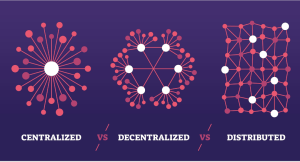
While “Systems Thinking” is an analytical tool used to look at a machine from the outside that many organizations use, Systems Intelligence is a pragmatic, human-centered competence. It is the ability to:
-
See the Whole: Recognizing that every action has a ripple effect across the entire community.
-
Sense Feedback Loops: Understanding the subtle human signals that tell you when a system is becoming toxic or healthy.
-
Intervene Gently: Instead of “fixing” things with a hammer, the systems-intelligent leader nudges the system to help it heal itself.
The Commander vs. The Curator
The mandate for leadership has fundamentally changed. We are moving from the era of the Commander to the era of the Curator.
| Feature | The Commander (Old Paradigm) | The Curator (New Paradigm) |
| Source of Power | Hoarding information and “Expertise” | Facilitating the flow of information |
| Focus | Efficiency and short-term metrics | Resilience and long-term well-being |
| Communication | Top-down directives | Creating spaces for “Collective Genius” |
| Core Question | “How do I fix this?” | “Who needs to be connected to solve this?” |
Moving from Theory to Action: How we use CI
The question for modern leaders is no longer “Do I have the answer?” but “Have I built a system that allows the answer to emerge?” To do this, we must re-imagine how our institutions function:
-
In Business: It means moving beyond “customer feedback” to Community-Led Innovation. It’s about building platforms where your stakeholders don’t just consume your product, but actively participate in its evolution thus reducing R&D risk and building fierce brand loyalty.
-
In Politics: It means moving toward Participatory Governance. Instead of policies created in a vacuum, leaders use Community Intelligence to run “citizen assemblies” or digital crowdsourcing, ensuring that laws are grounded in the lived reality of the people, not just theoretical data.
-
In Leadership: It means becoming an Architect of Participation. Your job is to create “psychological safety” where the quietest person in the room feels empowered to share a critical insight that might save the project.
This shift is exactly why The Elan Project exists. We recognize that the old tools of command and control are broken. We are dedicated to building the frameworks, the networks, and the literacy required to tap into Community Intelligence.
The data backs this approach. A study by Boston Consulting Group (BCG) found that companies aligning with stakeholder intelligence outperform their peers by nearly 10% in annual growth. Furthermore, the World Economic Forum found that decentralized networks recovered 50% faster during global disruptions.
The challenges we face today are too complex for any one person to solve from the top. The intelligence is already there in the community. We just need leaders brave enough to build the systems to tap into it.
At The Elan Project, we aren’t just looking for better leaders; we are building better systems for intelligence to flow.